Component
CNC Threaded Components with Thread Fit, Chamfer and Burr Control
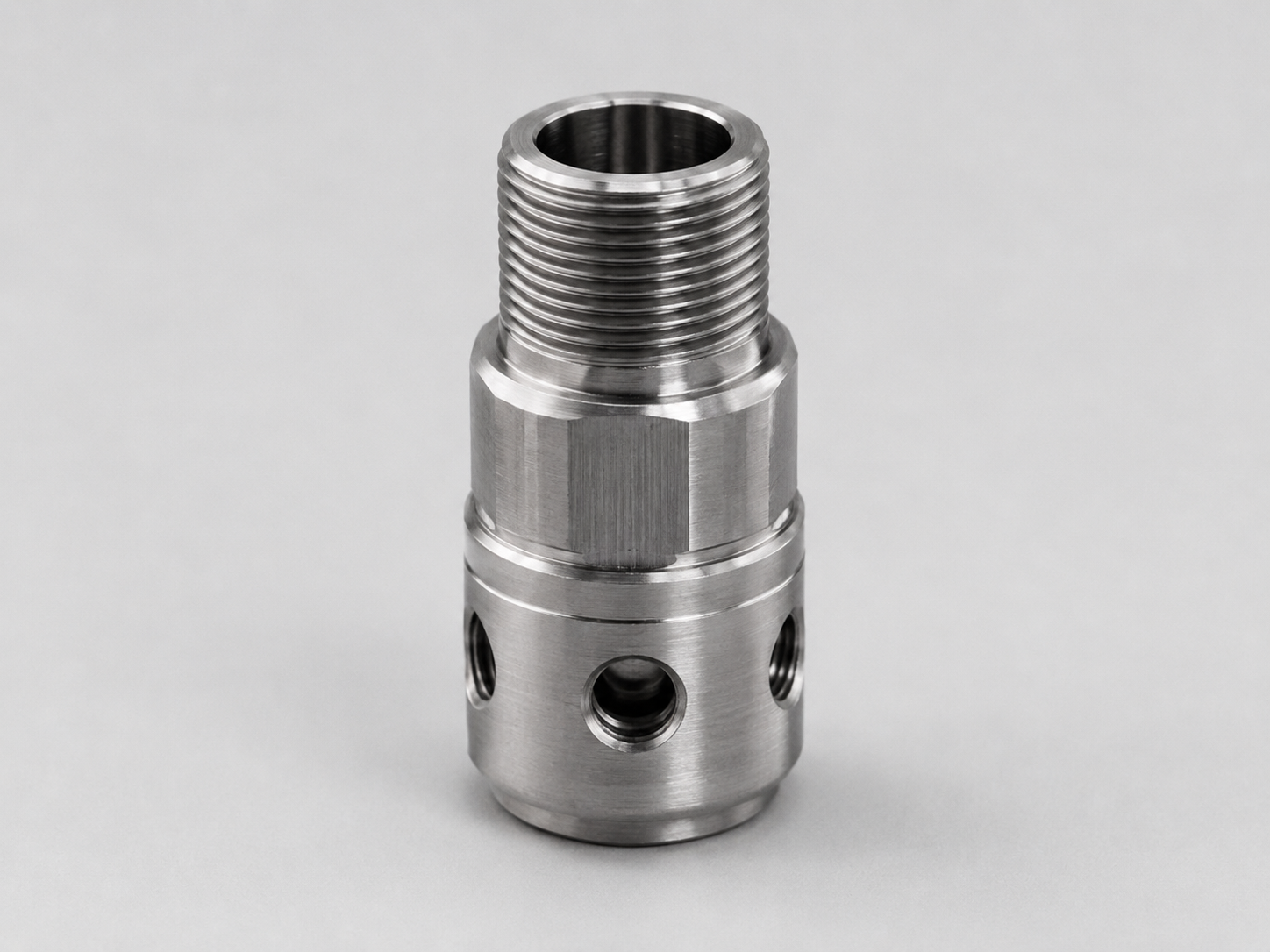
DXSCNC manufactures drawing-based CNC threaded components for overseas buyers who need reliable thread fit, clean thread starts and controlled burr conditions. Threaded features may appear on shafts, sleeves, adapters, fittings, bushings, flanged parts and valve-related connectors. The main issue is not only cutting a thread, but confirming thread standard, engagement length, relief design, chamfer, gauge method, material behavior and surface treatment effect before production.
DXSCNC is a China-based precision CNC turning and turn-mill machining supplier focused on drawing-based rotational and assembly-sensitive components. Our machining range supports parts up to 400 mm turning diameter and up to 500 mm machining length.
Typical Parts We Manufacture
- externally threaded shafts and studs
- internally threaded sleeves and bushings
- threaded adapters and fittings
- threaded spacers, collars and connectors
- components with multiple thread sizes
- parts with threads plus cross holes, flats or grooves
Common Materials
- 304 and 316 stainless steel for corrosion resistance
- brass and copper alloys for adapters and fittings
- 6061, 6082 and 7075 aluminum for lightweight threaded parts
- carbon steel and alloy steel for strength
- 42CrMo/42CrMo4 where higher mechanical properties are needed
Critical Features
- metric, UNC, UNF or drawing-defined thread standard
- thread start chamfer and entrance condition
- thread relief, undercut or runout area
- internal burr control after drilling or tapping
- thread fit after plating, anodizing or passivation
- inspection with plug gauges, ring gauges or customer-defined methods
Manufacturing Risks to Review
Thread problems often appear late if the thread standard, coating allowance or gauge method is not clear at RFQ stage. Stainless steel threads can gall or form burrs. Aluminum threads may be affected by anodizing. Brass threads are generally machinable but still need clean starts and sealing surface review for fittings. DXSCNC checks thread specification, tool access, surface treatment and inspection feasibility before confirming production approach.
For overseas buyers, this review step is important because it reduces avoidable quoting mistakes and helps confirm whether the drawing requirement can be inspected after machining. DXSCNC does not assume a part is easy only because it is rotational. We review the functional surfaces, datum references, feature order, burr locations and surface treatment influence before production planning.
Inspection Focus
- thread gauge or fit check
- thread depth and engagement length
- chamfer and thread entrance condition
- burrs after tapping or milling
- related sealing or mating faces
- visual inspection after surface treatment
RFQ Checklist
Please include the following information when sending drawings for review:
- 2D drawing and/or 3D model
- Material grade and specification
- Quantity and expected batch size
- Surface treatment or coating requirements
- Critical tolerances and inspection notes
- Thread standard if applicable
- Surface finish requirements
- Assembly or functional notes
- Target delivery date
Related DXSCNC Pages
FAQ
Can DXSCNC machine both internal and external threads?
Yes. Internal and external threads are both supported when the drawing defines the standard, depth, tolerance and functional requirements.
Why should surface treatment be reviewed for threaded parts?
Plating, anodizing or coating can change thread fit, especially for small or tight threads.
What thread information should be included in an RFQ?
Include thread standard, tolerance class, depth or engagement length, gauge requirement and any mating part notes.
How DXSCNC Supports Overseas Buyers
Overseas buyers often need more than a unit price. They need a supplier that can read drawings carefully, identify unclear requirements, ask useful technical questions and protect the project from avoidable production risk. DXSCNC supports this process by reviewing the part geometry, material grade, tolerance notes, surface treatment, inspection requirements and packing expectations before quotation.
For drawing-based CNC machined parts, communication quality is part of manufacturing quality. If the drawing contains critical bores, threads, datum relationships, sealing faces, runout requirements or coating notes, these points should be reviewed before cutting material. This helps reduce misunderstandings between engineering, procurement and production teams.
DXSCNC also supports export-oriented projects where parts must arrive protected and ready for inspection. Threads, polished surfaces, anodized surfaces, sealing faces and precision bores may need separated packing or extra protection. When packing requirements are known early, they can be considered together with machining and inspection.
What Makes a Good RFQ for This Page
A useful RFQ does not need to be long, but it should be clear. Buyers should send the drawing package, material grade, quantity, tolerance requirements, surface treatment and target delivery date. If the part has an assembly function, that function should be mentioned. For example, a bore used for sliding fit, a face used for sealing, or a thread used for repeated assembly may need extra inspection attention.
When the project is urgent, please state the required delivery date and whether partial shipment is acceptable. When the quantity may increase later, it is also helpful to mention prototype quantity and expected production quantity separately. This allows DXSCNC to review both the first batch and repeat-batch manufacturing approach.
Request a Quote
If you are sourcing drawing-based CNC turned or turn-mill components, send your drawing package to DXSCNC for review.