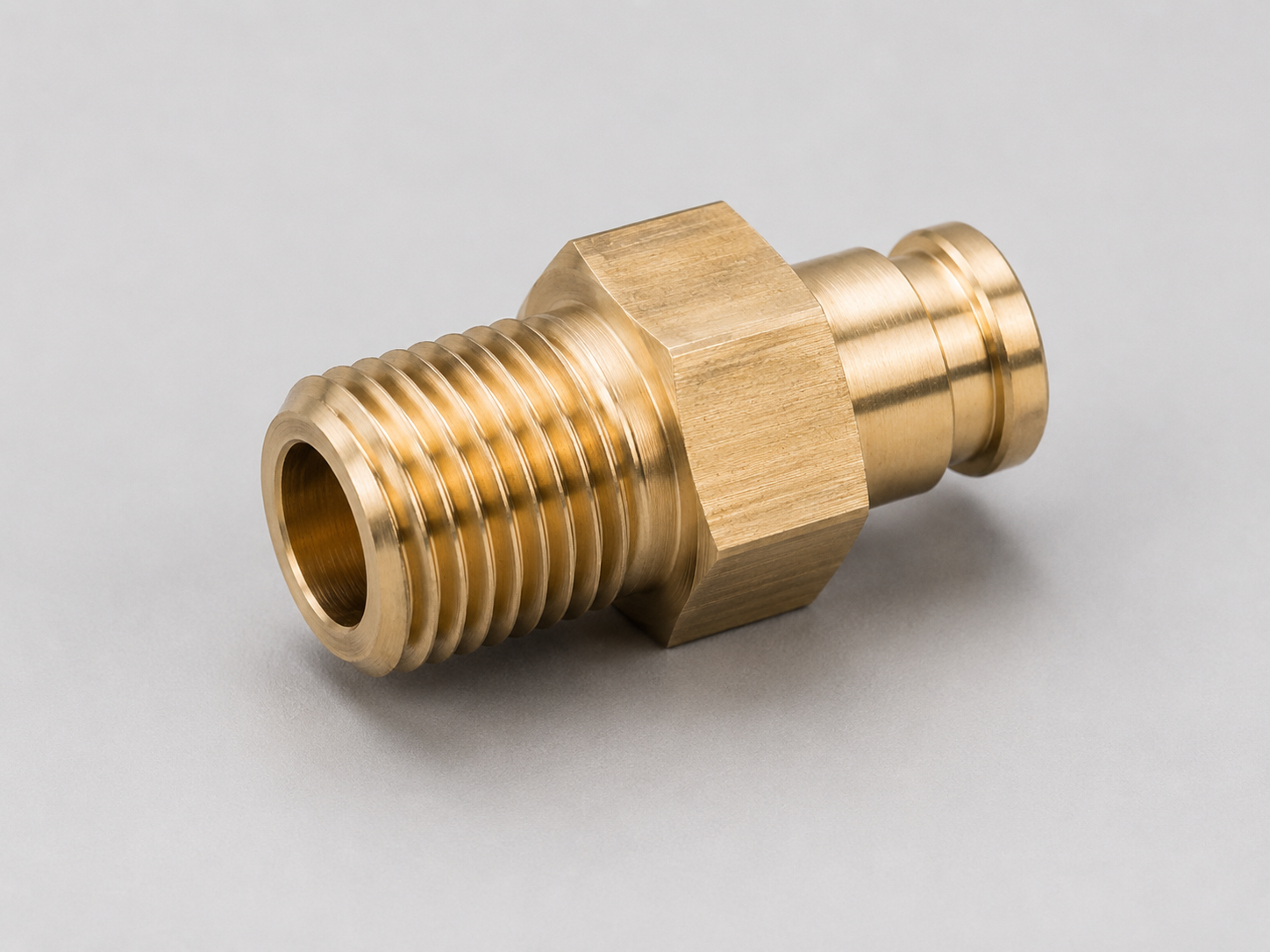
Brass and copper alloys for fittings, adapters and fluid-control components.
Component-Specific CNC Machining
CNC Machined Adapters, Brass Fittings, Spacers and Connection Parts
Adapters and fittings connect mechanical, fluid-control, valve, fixture and equipment assemblies. They often combine threads, bores, sealing faces, wrench flats, ports, shoulders and material-specific requirements. Because the part is usually small and functional, buyers need more than a shape quotation. Thread fit, sealing face condition, burr control, material compatibility and packing protection must be reviewed from the drawing.
DXSCNC manufactures CNC machined adapters, brass fittings, threaded connectors, spacers, collars, sleeves, posts and valve-related turned parts. Brass and stainless steel fittings are common, but aluminum, alloy steel and engineering plastics may also be used depending on application. CNC turning covers bores, threads, faces, grooves and chamfers; turn-mill machining is useful for wrench flats, cross holes, ports, side threads and bolt patterns.
For overseas buyers, adapter and fitting RFQs should include thread standards, sealing requirements, material grade, surface finish, fluid or assembly notes where allowed, quantity and target delivery date. If the part includes a sealing face or port intersection, burr-control and inspection notes are especially useful.
Machining Range
DXSCNC focuses on small to mid-size precision turned and turn-mill components.
Max turning diameterUp to 400 mm
Max machining lengthUp to 500 mm
Typical machining tolerance: +/-0.02 mm for suitable CNC turned and turn-mill features after drawing review.
Tolerance feasibility depends on material, geometry, part size, wall thickness, surface treatment, workholding and inspection method. Send the drawing so the feature relationships can be reviewed before quoting.
Send drawings for size review
Share the drawing, material grade, tolerance requirements and quantity so we can confirm whether the part fits the machining range and process plan.
Send Drawings for ReviewTypical Part Types
- Brass adapter fittings
- Threaded connectors
- Spacers and collars
- Valve-related fittings
- Sleeve adapters
- Reducer or extension adapters
- Ports and connector bodies
- Connection components with wrench flats
Common Materials
304 and 316 stainless steel for corrosion-resistant adapters and sleeves.
6061 and 6082 aluminum for lightweight spacers and mounting adapters.
Carbon and alloy steel for strength-related connection components.
Critical Features
- Internal and external threads
- Bores and through holes
- Sealing faces
- Wrench flats
- Cross holes and ports
- Shoulders and grooves
- Chamfers and lead-in details
- Burr-free intersections
Drawing review point
For drawing-based parts, the same nominal feature can have different manufacturing risk depending on datum references, tolerance, material, quantity and final assembly requirements.
Precision Focus
For adapters and fittings, precision control may involve thread fit, sealing faces, bore condition, mating diameters and burr control around ports or connection features.
Manufacturing Risks
Risk 1
Thread standard mismatch can cause assembly failure.
Risk 2
Sealing faces can be damaged if not protected during packing.
Risk 3
Ports and cross-hole intersections can leave internal burrs.
Risk 4
Brass parts can mark easily during clamping or handling.
Risk 5
Surface treatment or plating can affect thread fit and sealing surfaces.
Inspection Focus
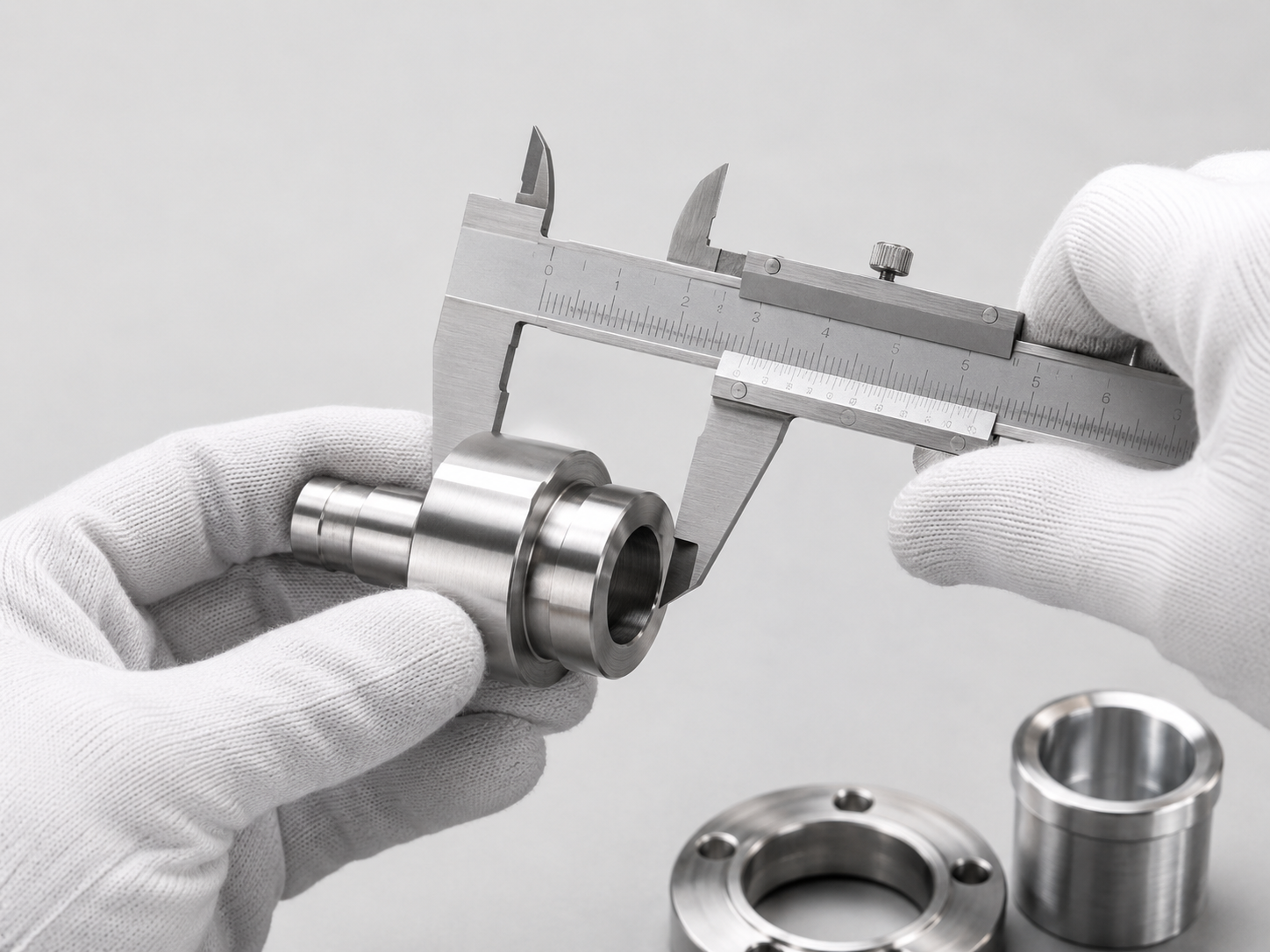
- Thread gauge checks where required
- Bore and port condition
- Sealing face visual review
- Flat and wrench feature dimensions
- Burr checks at ports and thread starts
- Packing inspection before export
Surface Treatment Considerations
Adapters and fittings may require nickel plating, tin plating, passivation, anodizing, black oxide, polishing or protective oil. Buyers should clarify which surfaces are sealing surfaces and whether plating thickness affects thread or bore fit.
Surface treatment can affect final dimensions, thread fit, cosmetic appearance, corrosion resistance and packing requirements. Please identify surfaces that must remain protected, masked, untreated or measured after finishing.
Finishing notes to provide
- Anodizing, plating, passivation, black oxide or other finish
- Color or appearance requirement if relevant
- Masking requirement for bores, threads or sealing faces
- Dimensions required before or after treatment
- Packing sensitivity for finished surfaces
RFQ Checklist
- 2D drawing and/or 3D model
- Material grade and equivalent standard
- Quantity and expected repeat demand
- Surface treatment or heat treatment
- Critical tolerances and datum references
- Thread standard, fit and depth
- Surface finish requirements
- Burr-free or sealing-face areas
- Application or assembly notes
- Target delivery date
Send drawings for review
DXSCNC will check machining range, workholding, tool access, tolerance risk, material behavior, inspection feasibility and export packing before quoting.
Send Drawings for ReviewRelated Capabilities
Related Materials
Brass CNC Turned Fittings
View related page316 Stainless Steel CNC Machining
View related page6061 Aluminum CNC Machining
View related pageRelated Applications
Valve & Fluid Control
View related pageIndustrial Automation
View related pageRobotics
View related pageRelated Brass Turn-Mill Case
Review a real DXSCNC brass turn-mill component case using customer-approved public finished-part photos. The case focuses on strict geometric tolerance review, CMM inspection planning, anti-oxidation treatment and individual packing protection.
Brass turn-mill component with CMM inspection
See the public project facts, finished-part photos and buyer review points.
Brass turn-mill case studyFAQ
Can DXSCNC machine brass fittings?
Yes. Brass adapters, threaded fittings and connector components are a common fit for CNC turning and turn-mill machining.
What fitting details are important for RFQ?
Thread standard, sealing face notes, bore requirements, material grade, surface treatment and burr-free areas should be included.
Can adapters include wrench flats or side ports?
Yes. Wrench flats, side ports and cross holes are reviewed as turn-mill features.
How are sealing faces protected?
Sealing faces can be visually checked and protected during packing according to the drawing or buyer notes.
Related Engineering Notes
Review the machining details that affect threaded connections, sealing faces and fluid-control features.