Aluminum for lightweight mounting flanges and covers.
Component-Specific CNC Machining
CNC Machined Flanged Components with Bolt Patterns and Sealing Faces
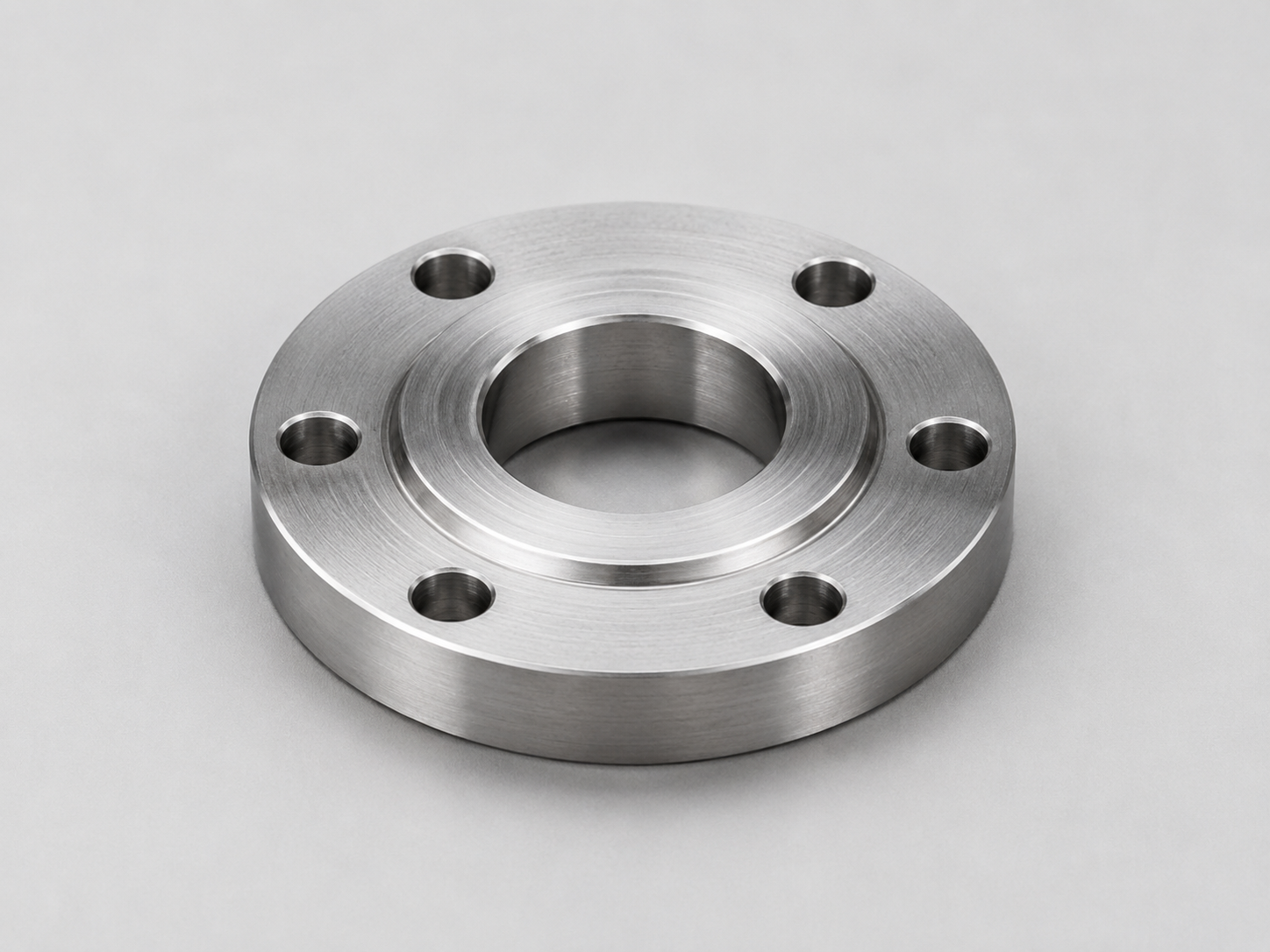
Flanged components combine rotational machining with face, bore and mounting features. Typical parts include small flanges, flanged sleeves, valve-related connectors, mounting flanges, sensor flanges, adapter flanges and covers with a central bore or bolt pattern. These parts often need more than a simple profile cut because the bore, flange face, bolt holes and sealing surface may all relate to the same functional datum.
DXSCNC reviews flanged parts around central bore alignment, face quality, bolt-hole position, sealing face condition, thread depth, flatness where specified, and burr control around holes and edges. CNC turning is suitable for the OD, ID, bore and face features. Turn-mill machining is useful when the flange includes bolt patterns, side holes, slots, milled flats or angular features that need to stay related to turned datums.
For overseas procurement, a complete flanged-part RFQ should identify which face is functional, which bore controls alignment, whether the bolt pattern has positional tolerance, and whether any sealing surface requires special finish or protection during packing. This prevents cost and quality assumptions from being made after the order starts.
Machining Range
DXSCNC focuses on small to mid-size precision turned and turn-mill components.
Max turning diameterUp to 400 mm
Max machining lengthUp to 500 mm
Typical machining tolerance: +/-0.02 mm for suitable CNC turned and turn-mill features after drawing review.
Tolerance feasibility depends on material, geometry, part size, wall thickness, surface treatment, workholding and inspection method. Send the drawing so the feature relationships can be reviewed before quoting.
Send drawings for size review
Share the drawing, material grade, tolerance requirements and quantity so we can confirm whether the part fits the machining range and process plan.
Send Drawings for ReviewTypical Part Types
- Flanged sleeves
- Mounting flanges
- Valve-related flanges
- Adapter flanges
- Flanged bushings
- Covers with central bores
- Connector flanges
- Small round plates with bolt patterns
Common Materials
304 and 316 stainless steel for corrosion-resistant flanges or valve-related parts.
Carbon and alloy steel for strength or wear requirements.
Brass and copper alloys for fluid-control adapters and connector flanges.
Critical Features
- Central bores
- Bolt patterns
- Sealing faces
- Flatness or face condition where specified
- Threaded holes
- Countersinks or counterbores
- Datum relationships between bore and bolt pattern
- Chamfers and edge breaks
Drawing review point
For drawing-based parts, the same nominal feature can have different manufacturing risk depending on datum references, tolerance, material, quantity and final assembly requirements.
Precision Focus
For flanged components, key precision areas may include central bore size, bolt-hole position, face flatness, sealing surface condition and bore-to-bolt-pattern relationship.
Manufacturing Risks
Risk 1
Bolt pattern position can drift if the datum relationship is unclear.
Risk 2
Sealing faces can be scratched during machining, inspection or packing.
Risk 3
Thin flanges may distort from clamping or material removal.
Risk 4
Threaded holes and cross features require burr control.
Risk 5
Surface treatment can affect sealing faces or threaded holes if masking or allowance is not reviewed.
Inspection Focus
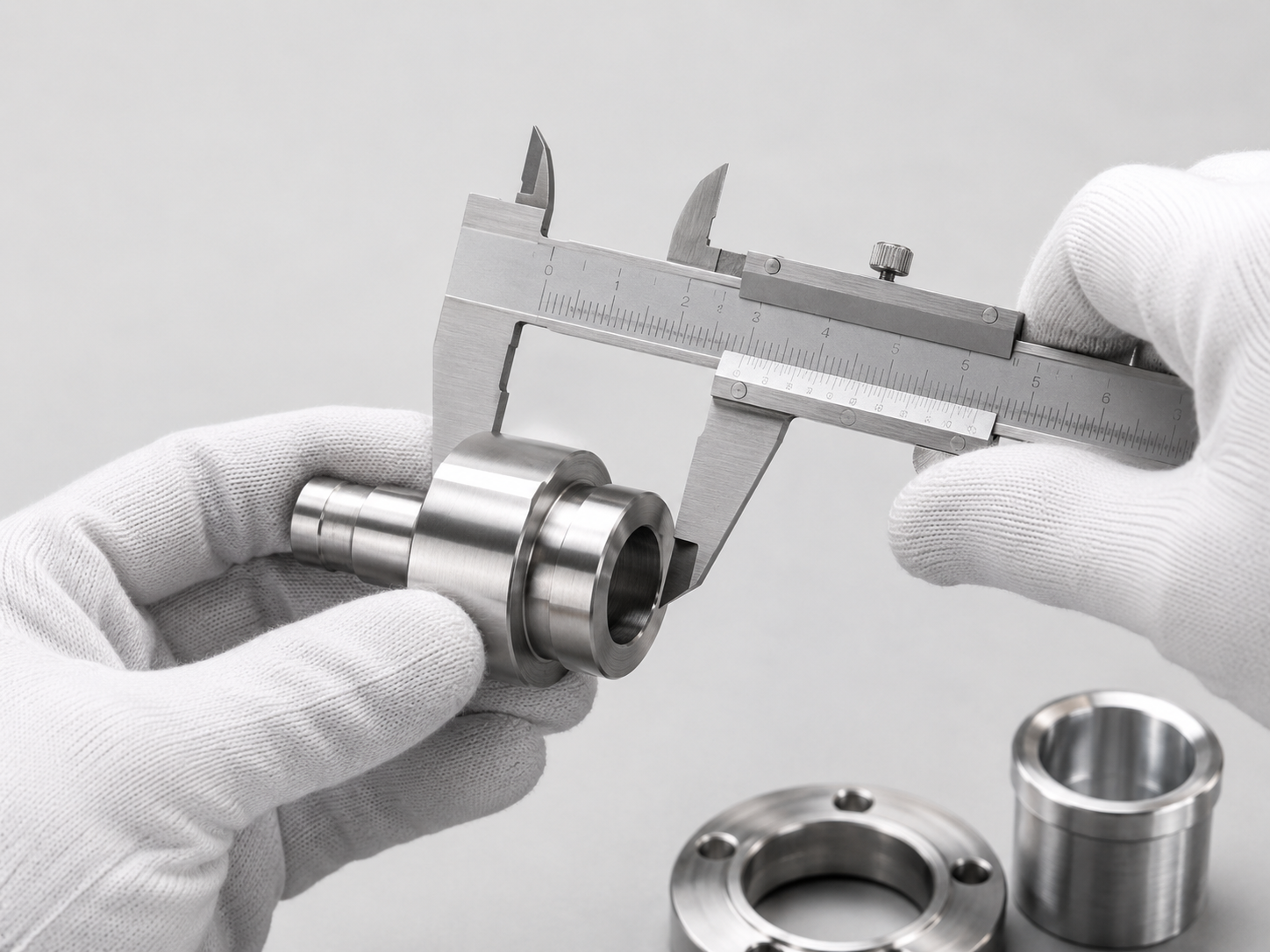
- Bore size and bore position
- Bolt pattern and hole diameter checks
- Face thickness and flatness when specified
- Thread checks
- Sealing face visual review
- Burr checks around holes and chamfers
Surface Treatment Considerations
Flanged parts may require anodizing, plating, passivation, black oxide, polishing or protected bare machined faces. Buyers should indicate if sealing faces must remain untreated, masked or protected during finishing and export packing.
Surface treatment can affect final dimensions, thread fit, cosmetic appearance, corrosion resistance and packing requirements. Please identify surfaces that must remain protected, masked, untreated or measured after finishing.
Finishing notes to provide
- Anodizing, plating, passivation, black oxide or other finish
- Color or appearance requirement if relevant
- Masking requirement for bores, threads or sealing faces
- Dimensions required before or after treatment
- Packing sensitivity for finished surfaces
RFQ Checklist
- 2D drawing and/or 3D model
- Material grade and equivalent standard
- Quantity and expected repeat demand
- Surface treatment or heat treatment
- Critical tolerances and datum references
- Thread standard, fit and depth
- Surface finish requirements
- Burr-free or sealing-face areas
- Application or assembly notes
- Target delivery date
Send drawings for review
DXSCNC will check machining range, workholding, tool access, tolerance risk, material behavior, inspection feasibility and export packing before quoting.
Send Drawings for ReviewRelated Capabilities
Related Materials
6061 Aluminum CNC Machining
View related page316 Stainless Steel CNC Machining
View related pageBrass CNC Turned Fittings
View related pageRelated Applications
Industrial Automation
View related pageValve & Fluid Control
View related pageRobotics
View related pageRelated Brass Turn-Mill Case
Review a real DXSCNC brass turn-mill component case using customer-approved public finished-part photos. The case focuses on strict geometric tolerance review, CMM inspection planning, anti-oxidation treatment and individual packing protection.
Brass turn-mill component with CMM inspection
See the public project facts, finished-part photos and buyer review points.
Brass turn-mill case studyRelated Q345R Pressure Component Production Example
Review a DXSCNC-owned Q345R sealed gas-chamber component production example. The public page focuses on CNC turning, sealing-related features, nickel-plating allowance, dimensional review and inspection planning without publishing customer or drawing information.
Q345R nickel-plated pressure component
The supplied project requirement identifies gas service up to 6 MPa; the page does not present a public pressure-test record or product certification.
View production exampleFAQ
Can DXSCNC machine flanges with bolt patterns?
Yes. Bolt patterns are reviewed as turn-mill or secondary milling features related to the central bore and face datums.
What sealing face notes are useful?
Provide surface finish, flatness if required, coating restrictions and packing sensitivity for sealing surfaces.
Can flanged components include threaded holes?
Yes. Please provide thread standard, depth, fit and burr-free requirements for threaded holes.
How are flanged parts packed?
Packing depends on the drawing, but sealing faces, threads and cosmetic surfaces can be individually protected when required.
Related Flanged Component Example
Review how the central bore, flange face and bolt pattern should be controlled from a clear datum scheme.